
Understanding Cycling Q-Factor: What it is and it's Impact on Comfort and Performance
In the world of cycling, bike fit is everything. From saddle height to handlebar reach, every adjustment can make or break your ride. One often-overlooked element is the Q-factor, a measurement that plays a crucial role in how your body interacts with the bike. Whether you're a casual commuter or a competitive racer, understanding Q-factor can help you pedal more efficiently and comfortably. Let's dive into what it is and why it matters.
What Is Q-Factor?
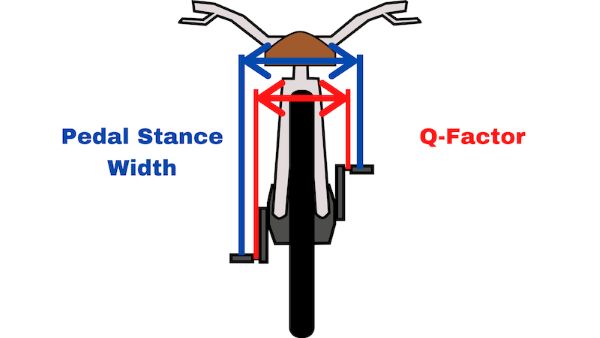
Q-factor refers to the horizontal distance between the outside of one crank arm and the outside of the opposite crank arm, measured laterally through the center of the bottom bracket. It's essentially the stance width of your feet when clipped into the pedals. This isn't just about the cranks; it includes contributions from the bottom bracket, pedals, and even cleat positioning. A typical road bike Q-factor ranges from 145-150mm, while mountain bikes might be wider at 160-170mm due to chainstay clearance needs. Your natural off-bike stance influences the ideal Q-factor—think of it as aligning your body's biomechanics with the bike's geometry.
How Q-Factor Affects Rider Comfort
Comfort starts with alignment. An optimal Q-factor keeps your hips, knees, and ankles in a straight line during the pedal stroke, minimizing strain on joints. If it's too wide, your knees may splay outward, leading to pain, especially in the knees or hips. This is common for smaller riders or those with narrower hips, who might feel awkward and inefficient. Conversely, a narrower Q-factor reduces knee and hip stress, allowing for more natural muscle recruitment. Over time, a mismatched Q-factor can contribute to overuse injuries, like IT band syndrome or lower back discomfort. For larger riders, a slightly wider stance might feel more stable and comfortable, matching broader hip widths.
How Q-Factor Influences Performance
Beyond comfort, Q-factor directly impacts your pedaling efficiency and power output. Research shows that deviating from your optimal Q-factor—often narrower than standard—can reduce performance by over 5%. A lower Q-factor promotes better biomechanical efficiency, allowing cyclists to generate more power with less effort. In time trials or races, this could translate to significant time savings. However, a wider Q-factor enhances stability, which is beneficial for off-road riding, though it decreases cornering clearance and increases the risk of pedal strikes. For most riders, finding that sweet spot within 5-10mm of variability maximizes both power and endurance without sacrificing control.
Tips for Optimizing Your Q-Factor
To adjust Q-factor, consider swapping cranks for shorter ones, using offset pedals, or opting for a narrower bottom bracket. A professional bike fit is invaluable, as it measures your stance and tests adjustments. Start by noting any discomfort during rides—if your heels rub the chainstays or knees ache, it might be time to tweak.
In summary, Q-factor is a key bike fit metric that bridges comfort and performance. By dialing it in, you can ride longer, faster, and pain-free. Whether tweaking your setup or buying a new bike, keep Q-factor in mind—your body will thank you.
Visit our website: www.custombikefit.com
Submit a bike fit enquiry: CLICK HERE
Call Michael: 0400 510 515
