
The History of the Tour Down Under
The History of the Tour Down Under - Australia's Premier Cycling Race
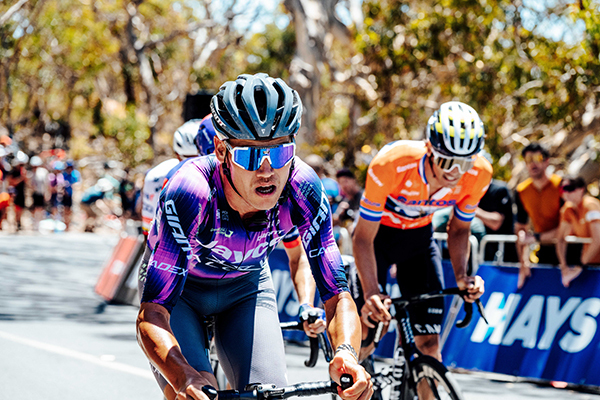
The Tour Down Under, held annually in the sun-drenched landscapes of South Australia, stands as a beacon of professional cycling in the southern hemisphere. As the opening event of the UCI WorldTour calendar, it draws elite riders from around the globe to compete in a multi-stage road race that showcases Adelaide's vibrant city streets, rolling Adelaide Hills, and picturesque Barossa Valley. Since its inception in 1999, the race has evolved from a regional initiative into a world-class spectacle, blending high-stakes competition with economic boosts for the region. With a history marked by innovation, star power, and resilience, the Tour Down Under has cemented its place as Australia's greatest cycling event.
The origins of the Tour Down Under trace back to a strategic pivot in South Australia's sporting landscape. In the late 1990s, the state lost its Formula 1 Grand Prix to Melbourne, leaving a void in major events. Premier John Olsen spearheaded the creation of a new cycling race to fill this gap and promote tourism. The inaugural Jacobs Creek Tour Down Under kicked off on January 19, 1999, as a UCI 2.4-class event. Local hero Stuart O'Grady claimed victory, edging out competitors in a six-stage format that featured international teams like Crédit Agricole and Mapei. This debut not only highlighted Australian talent but also set the tone for the race's focus on sprint finishes and challenging climbs. O'Grady's win was a fitting start; he would repeat the feat in 2001, becoming one of the race's early icons.
As the new millennium dawned, the Tour Down Under rapidly ascended the ranks of global cycling. By 2005, it earned the highest UCI ranking for a race outside Europe, attracting more top-tier teams. A pivotal milestone came in 2008 when it became the first non-European event to join the UCI ProTour (later rebranded as the UCI WorldTour), guaranteeing participation from the sport's elite squads. This elevation transformed the race, with economic impacts soaring—from $17.3 million in 2008 to $39 million in 2009. Spectator numbers swelled, peaking at over 782,000 in 2011. The event's unique January timing, amid Australia's summer, added an element of endurance, with riders often battling temperatures exceeding 40°C (104°F).
Notable moments have defined the race's legacy. Lance Armstrong's comeback in 2009, post-retirement, drew massive crowds and global media attention, amplifying the event's profile five-fold. Australian riders dominated early on, with Simon Gerrans holding the record for most overall wins (four: 2006, 2012, 2014, 2016). Daryl Impey became the first to defend his title consecutively in 2018 and 2019, while Richie Porte triumphed in 2017 and 2020. Sprinters like André Greipel (2008, 2010) and Caleb Ewan have thrived on the flatter stages, but hilltop finishes at Willunga Hill often decide the general classification.
The women's race has its own inspiring trajectory. Beginning as exhibition criteriums in 2011, it formalized as the Women's Tour Down Under in 2016, with Katrin Garfoot taking the first win. By 2018, it achieved UCI 2.1 status with equal prize money to the men's event—a progressive step in gender equity. In 2023, it ascended to UCI Women's WorldTour level, further elevating women's cycling. Standout winners include Amanda Spratt (2017–2019) and Grace Brown (2023).
The race faced its sternest test during the COVID-19 pandemic. Cancelled in 2021 and 2022, it was replaced by the Santos Festival of Cycling, a domestic-only event won by Luke Durbridge (men, 2021) and Sarah Gigante (women, 2021). The Tour roared back in 2023 with Jay Vine's victory, followed by Stephen Williams in 2024 and Jhonatan Narváez in 2025—the latter marking Ecuador's first win in the event's 25th edition. These recent years have seen innovative routes, including night stages and gravel sections, adapting to modern cycling trends.
Looking ahead, the 26th edition is set for January 16–25, 2026, promising another thrilling chapter. Under race director Stuart O'Grady since 2021, the Tour continues to innovate, with distinctive jerseys like the ochre leader's jersey symbolizing South Australia's red earth.
In its quarter-century, the Tour Down Under has generated over $800 million for South Australia's economy while fostering a global cycling community. From humble beginnings to WorldTour status, it embodies resilience, athleticism, and the spirit of Down Under. Whether you're a fan cheering roadside or a rider chasing glory, this race captures the essence of cycling's enduring appeal.
Ride safe and see you on the road!
Visit our website: www.custombikefit.com
Submit a bike fit enquiry: CLICK HERE
Call Michael: 0400 510 515
